
Indian savers poured a record Rs 32,087 crore into SIPs in March 2026, according to the AMFI Crisil Factbook 2026, and they kept paying in through a sharp equity correction. That quiet persistence is the story behind every successful SIP investment plan. Meanwhile, many traders who tried to time the market lost heavily.
If you are weighing discipline against timing for 2027, speak to a Hedge Equities advisor in Kochi before you commit money. This guide explains what the 2026 data shows, how to pick funds as a beginner and what to check before you open any investment account.
Key Takeaways
- A SIP investment plan rewards consistency, and 2026 data from AMFI, SEBI and Morningstar shows disciplined investors kept far more of their returns than frequent traders.
- The best SIP mutual fund for beginners 2027 is the one that fits your goal, time horizon and risk comfort, not last year's top performer.
- Before searching for a stock broking account near me India, check SEBI registration, costs and whether you get advice or only a trading screen.
What the 2026 Numbers Say About SIP Discipline
India's SIP habit has moved from a niche product to a mainstream savings routine, and the numbers from fiscal 2026 show it held firm even when markets fell.
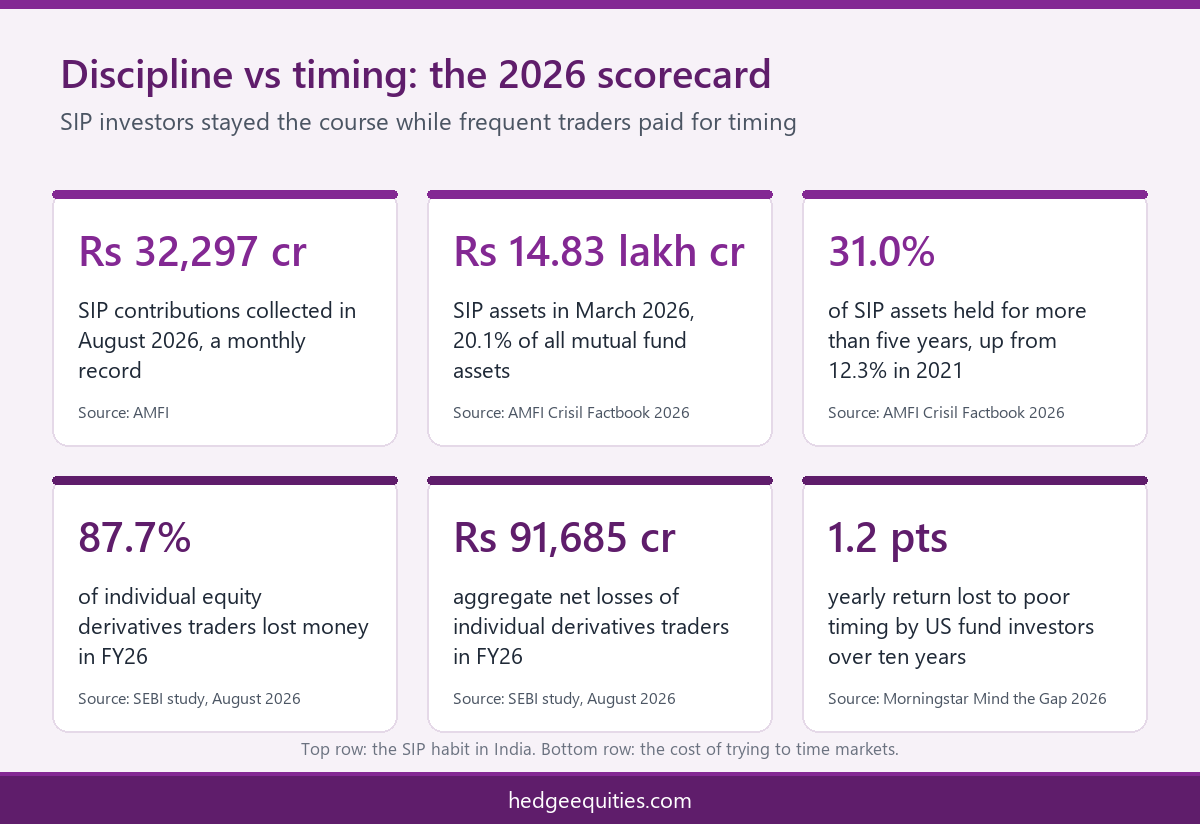
The AMFI Crisil Factbook reports that SIP assets reached Rs 14.83 lakh crore by March 2026, up from Rs 4.25 lakh crore in March 2021. SIPs now make up 20.1% of all mutual fund assets, compared with 13.5% five years earlier. Monthly flows kept climbing after the fiscal year closed. AMFI's latest update puts August 2026 SIP contributions at Rs 32,297 crore, a fresh record.
The more telling figure is patience. The share of SIP assets held for more than five years rose to 31.0% in March 2026, from 12.3% in March 2021. Investors are not just starting SIPs. They are staying with them. Kerala is part of this shift too. The Factbook notes that Kerala's mutual fund assets grew more than threefold between fiscal 2021 and fiscal 2026, although the state's mutual fund assets still sit below 10% of its GSDP. That gap suggests plenty of room for steady, goal based investing across the state.
What does this mean for 2027? Treat these figures as an outlook signal, not a forecast. They show that millions of households now treat a SIP investment plan as a fixed monthly bill, much like rent or school fees. That mindset is exactly what helps investors ride out the next correction instead of reacting to it.
Why Market Timing Keeps Losing
Trying to buy at the bottom and sell at the top sounds simple, but regulator data and global research both show it rarely works for ordinary investors.
In August 2026, the Securities and Exchange Board of India published two studies on individual traders in equity derivatives. The findings are stark. About 87.7% of individual traders lost money in fiscal 2026, and their aggregate net losses came to about Rs 91,685 crore. The average loss per trader was about Rs 1.17 lakh. SEBI also found that higher trading intensity was linked to higher loss rates, and that more years of trading did not improve results.
The pattern is not unique to India. Morningstar's 2026 Mind the Gap study found that the average dollar invested in US funds earned 8.7% a year over the ten years to December 2025. The funds themselves returned 9.9% a year. That 1.2 percentage point gap came from the timing of purchases and sales, and it was widest in volatile funds. Morningstar's takeaway was simple: limit ad hoc trading and use regular, automated contributions.
How a SIP Investment Plan Turns Volatility Into an Advantage
A SIP removes the hardest decision in investing, which is when to act, and replaces it with a routine that works in rising and falling markets.
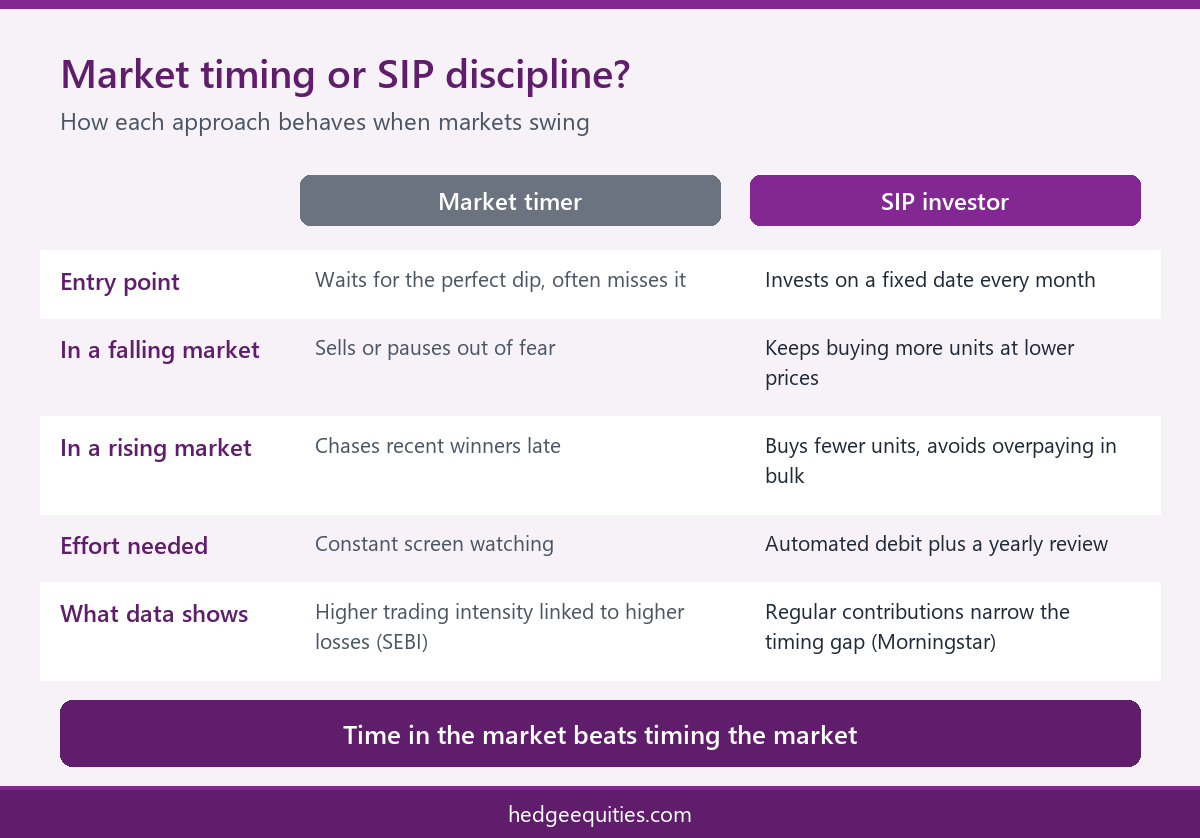
When you invest a fixed amount every month, you buy more units when prices fall and fewer when prices rise. This is called rupee cost averaging. It does not guarantee profits, but it spreads your entry price across many market phases. You can read a fuller primer in our guide to building wealth through monthly SIPs.
Automation also protects you from your own reactions. Headlines in 2027 will almost certainly bring new scares, from global rate moves to election cycles. A SIP investment plan keeps investing while the news cycle shouts. The outlook for next year is not about predicting the index. It is about holding a process steady enough to capture whatever returns the market delivers. Hedge Equities helps investors set up a disciplined SIP that matches each goal with a suitable fund mix and review schedule.
Three simple habits keep a SIP investment plan on track. First, raise your monthly amount when your income rises, even by a small step each year. Second, do not pause contributions just because markets fall, since that is when each rupee buys the most units. Third, review your funds once or twice a year against your goals rather than against daily market moves.
Choosing the Best SIP Mutual Fund for Beginners in 2027
There is no single best fund for everyone. The right choice depends on why you are investing, how long you can stay invested and how much volatility you can tolerate.
Start with the goal. A child's education fund ten years away can usually hold more equity than money you need in three years. Next, match the category to your risk comfort. The Factbook shows equity schemes took Rs 2.87 lakh crore of the Rs 3.40 lakh crore SIP flows in fiscal 2026, while hybrid and passive funds also grew. Beginners often prefer a diversified fund over a narrow sector or small cap theme. Starting with one or two well chosen funds is usually easier to track than spreading a small SIP investment plan across many schemes.
Then compare costs, fund house track record and portfolio overlap. Avoid picking a fund only because it topped last year's return table. If you are unsure where you stand, a financial health checkup can map your income, insurance and goals before you choose. That way, the best SIP mutual fund for beginners 2027 is chosen for your plan, not for a headline.
Before You Open a Stock Broking Account Near Me in India
Many new investors search for a stock broking account near me India before they have a plan. Account choice matters, but it should follow your strategy, not lead it.
First, confirm that any firm you deal with is registered with SEBI and displays its registration numbers clearly. Hedge Equities, set up in 2008 and headquartered in Kochi, lists its SEBI portfolio manager and research analyst registrations on its website. Second, check the full cost of investing, including brokerage, demat charges and taxes. Third, ask whether you will get guidance or only a trading app. SEBI's data shows that traders with no equity holdings had a 93% loss rate in fiscal 2026, so access without a plan can be costly.
A local advisor can help you combine a SIP with direct equity investing in a balanced way, so each rupee has a clear job. For most beginners, a SIP investment plan forms the core, while direct stocks stay a smaller, carefully chosen slice. Meeting someone face to face in your own city also makes it easier to ask questions, review documents and sort out service issues quickly.
Conclusion
The 2026 evidence points one way. Record SIP flows, longer holding periods and heavy losses among frequent traders all show that discipline is beating market timing again. A SIP investment plan will not make 2027 calm, but it gives you a process that keeps working while markets swing. Choose funds that fit your goals, check every intermediary's registration and review your plan once or twice a year. When you are ready to begin, apply online with Hedge Equities or visit our Palarivatom office in Kochi to build a plan around your goals.